
Dyscalculia can hurt your career and salary opportunities

Dyscalculia: News from the web:

Not one, not two, or three studies show a direct relationship between the ability to understand and master mathematical concepts and future employment and socioeconomic success. This concept is not entirely new. Education by area has always been related to the socioeconomic factor of families. However, for the psychology professors Stuart J. Ritchie and Timothy C. Bates of the University of Edinburgh, they are mathematics the ones that take the lead in this relationship.

Read all about it: HERE
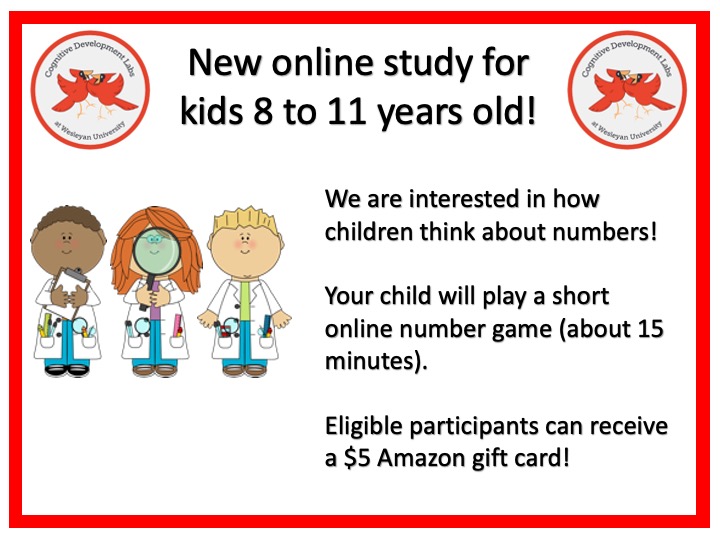
Parental impact

Dyscalculia: News from the web:

Dr. Lara Turci Faust, just successfully defended her (amazing) dissertation on how change in parents’ valuing of math and sports influences changes in their children’s values- and vice versa!

Contact her about it: HERE

Spatial ability used to detect Dyscalculia

Dyscalculia: News from the web:

A thesis from 1996 had as purpose:

The purpose of this study was to examine how spatial
abilities as measured on the Kaufman Assessment Battery for
Children (K-ABC) could be used to predict dyscalculia.

Spatial abilities were found to be most closely approximated on the
Spatial Memory subtest in the ability battery. This subtest
was examined in relationship to the Arithmetic subtest on the
achievement battery, and a high correlation was demonstrated.

This is interesting because there was critisism about the traditional way of assessing Dyscalculia by comparing ability (IQ) with achievement and this was a great measure to serve as an alternative.

Read all about it: HERE

How much do educators in the UK know about dyscalculia?

Dyscalculia: News from the web:

There is a PhD student from Loughborough University trying to find that out.

Their study has the following aims:

1. Educators’ awareness, knowledge and understanding of dyscalculia (a specific learning disorder in mathematics) and co-occurring developmental disorders.

2. Educators’ experiences of pre-qualifying and in-service training in dyscalculia and other developmental disorders.

3. Strategies and interventions that are currently working well to support children at risk of dyscalculia.

4. Educators’ perceptions about what might be beneficial in improving the outcomes of children at risk of dyscalculia. 

Read all about it: HERE