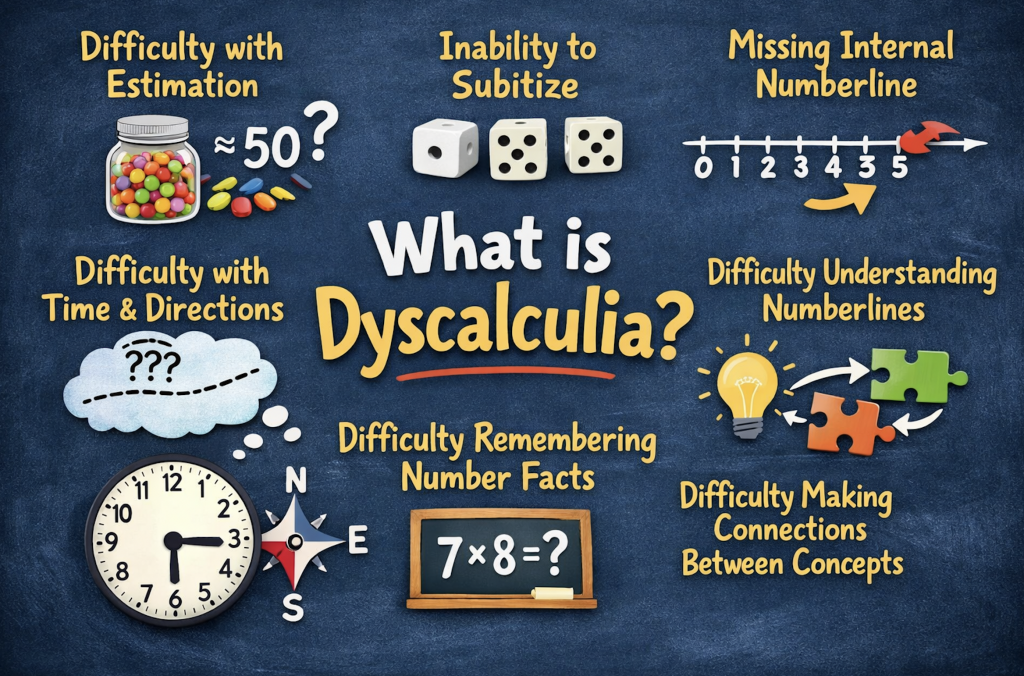
Picture and more information by DANAMATH.org


Dyscalculia, characterized by deficits in number sense and calculation skills, affects approximately 5–7% of the population and often persists into adulthood. A team from the University of Barcelona and the University of Vic – Central University of Catalonia (UVic-UCC) has developed and validated a digital serious game to address mathematical difficulties in children with this disorder in the early and middle stages of primary education.
Read all about it HERE
Inside the classroom at Trinity School, evidence-based differentiated instruction, in-class therapies, accommodations and assistive technology are seamlessly integrated into daily learning.
we need more schools like this!
Read all about it HERE
Dyscalculia is a specific learning disability that affects a person’s ability to understand and work with numbers. It can include finding it difficult to memorise numbers, mathematical concepts and steps in maths problems. This not only affects how students work and understand in the maths classroom, but can also lead to difficulty when maths is used across the curriculum and in everyday life.
Dyscalculia is not a reflection of a student’s intelligence, but instead a neurological difference in understanding mathematical information. This means when given the right support, students with dyscalculia can thrive in the maths classroom. It’s also important to know that each student with dyscalculia will have different strengths and challenges, so it’s important to provide the right support for each student.
Read further on this topic HERE
WhatsApp us