Dyscalculia: News from the web:
Check out this whole page with resources to help children who are born pre-term and have difficulties with Math.

Read all about it: HERE

Dyscalculia: News from the web:
Check out this whole page with resources to help children who are born pre-term and have difficulties with Math.
Read all about it: HERE
Dyscalculia: News from the web:
New research is presented on the page from Stanford by youcubed from Jo Boaler and it all shows how visual math can be.
our brain wants to think visually about maths. Building students’ mathematical understanding doesn’t just mean strengthening one area of the brain that is involved with abstract numbers, it means strengthening connections between areas of the brain and strengthening the visual pathways.
Read all about it: HERE
Dyscalculia: News from the web:
New research from the University of Sydney sheds light on how we perceive objects and know how many there are:
“Result shows that numerical information is intrinsically related to perception,” said Dr Elisa Castaldi from Florence University. “This could have important, practical implications. For example, this ability is compromised in dyscalculia which is a dysfunction in mathematical learning, so our experiment may be useful in early identification of this condition in very young children. It is very simple: subjects simply look at a screen without making any active response, and their pupillary response is measured remotely.”
Read all about it: HERE
Dyscalculia: News from the web:
‘Groupitizing’ refers to the observation that visually grouped arrays can be accurately enumerated much faster than can unstructured arrays. Previous research suggests that visual grouping allows participants to draw on arithmetic abilities and possibly use mental calculations to enumerate grouped arrays quickly and accurately. Here, we address how subitizing might be involved in finding the operands for mental calculations in grouped dot arrays. We investigated whether participants can use multiple subitizing processes to enumerate both the number of dots and the number of groups in a grouped array. We found that these multiple subitizing processes can take place within 150 ms and that dots and groups seem to be subitized in parallel and with equal priority. Implications for research on mechanisms of groupitizing are discussed.
Read all about it: HERE
Dyscalculia: News from the web:
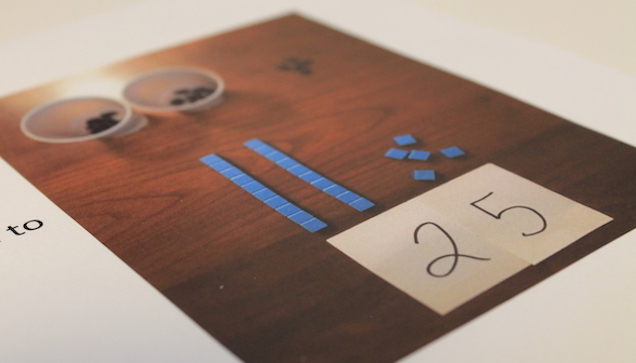
See the wonderful explanation from Kelly Mix, here is a quote:
The thing about number is it’s fairly difficult to “see.” Think about trying to explain to a visitor from space what we mean by “two.” You might point to two mittens, two cookies, and two trees, saying “these are all two.” This is a good approach, but there is so much detail and information in each of these kinds of objects, that it’s hard to focus on the quantity. Partly that’s because the “two-ness” is held by the sets of things, rather than by the things themselves; each mitten by itself is not “two.”
Read all about it: HERE
WhatsApp us